
"Produced in South Central"
2000 article(s) found

Honduras-#8231; Central and South American Agriculture and Animal Husbandry-Marcala Coffee Fair Trade
Professional coffee knowledge exchange more coffee bean information please follow the coffee workshop (Wechat official account cafe_style) Honduras Central and South America Agriculture and Animal Husbandry-Markara (Marcala) Coffee Fair Trade Association (F.T) the flavor of washed beans? Coffee produced in Honduras is rarely found in Taiwan's coffee market, but in terms of altitude and temperature changes and soil fertility.

Story characteristics of four major coffee producing areas in the world Coffee beans from North America, Africa, Asia, Central and South America
Beans taste different according to the region where they grow. The factors that affect the taste are the variety of coffee trees, the soil properties of growth, the climate and altitude of the cultivation garden, the care of picking results, and the process of bean treatment, etc. These elements vary from region to region, while bakers and integrated manufacturers look for the characteristics of each region, so that the comprehensive products have their own unique typical flavor. You can try to chase.

Major coffee bean producing areas in the world
Coffee comes from coffee beans, which are harvested and processed from the fruit of trees. Coffee trees grow at the center of the equator, between latitudes of 25 degrees south and north, and are called coffee belts in tropical or subtropical countries. at present, coffee is produced in more than 60 countries. Coffee is produced in South America, Central America, the West Indies, Asia, Africa, Arabia, the South Pacific and

Located in the middle of North and South America, the Guatemalan Coffee Waijangs Plateau
Guatemala is located in the center of North and South America, and its geographical location occupies an important position in Central America. Guatemala covers an area of about 108899 square kilometers. The land features can be divided into plateau volcanoes, lowland tropical forests, volcanic sandy shore plains along the Pacific coast, and virgin lands along the Caribbean Sea. The SierraMadre Mountains of Central America span east and west of Guatemala, covering an area of

A brief introduction to the history and culture of the origin and development of Dominican boutique coffee
Boutique coffee has become popular in recent years. High-quality coffee beans produced by some Dominican estates have a rich aroma, mellow taste and moderately bright sour taste, which are not far from the more famous Puerto Rico beans or Jamaican beans, and are also worth tasting. Dominica coffee beans have moderate acidity and rich fruit flavor. Western Hispaniola, 1500 m above sea level

Peruvian coffee has both the brightness of Central American coffee and the mellowness of South American coffee.
Fine coffee is made from boutique coffee beans. If the beans that make coffee are not boutique coffee beans, the coffee liquid produced cannot be called fine coffee. Boutique coffee is fresh coffee. Whether it's food or drink, of course, the fresh the better, and so is boutique coffee. High-quality coffee should keep the beans fresh before making, including the preservation of roasted beans, and the coffee should be made before making.

Introduction to Puerto Rico boutique coffee beans-Larez Yaoke Coffee in South-Central China
Features of Puerto Rico coffee: Yaocote is a fascinating coffee with a complete flavor, no bitterness, nutritious, fruity and worth tasting. Even Thales in Harrogate, UK, has imported 50 bags of Yaoke specialty coffee. Flavor: full granule, full flavor, rich aroma suggested baking method: medium baking ★★★

The main origin of coffee is South America. What are the coffee producing countries in South America? The three largest coffees in the world
Professional coffee knowledge exchange more coffee bean information please follow the coffee workshop (Wechat official account cafe_style) the main origin of coffee in South America, which coffee producing countries in South America? What are the three major coffee producing areas in the world? In 1718, the Dutch first brought some coffee to Surinam on the northeast coast of South America.

Flavor characteristics of coffee beans produced in Colombia Origin of altitude grinding scale varieties
The flavor characteristics of coffee beans produced in Colombia are made in Colombia, which is the second largest coffee exporter in the world, accounting for about 15% of the global output. Most of its coffee trees are grown in three mountains running through the north and south, with only Arabica species. A brief introduction to the origin and flavor of grilled coffee beans-South America! Although the output ranking of card frequent travelers is lower than that of Brazil, it does not produce coffee beans.
Main producing areas and characteristics of coffee
Coffee production zones (commonly known as coffee belts) range from 25 degrees north latitude to 30 degrees south latitude, covering many countries in Central, West Africa, the Middle East and South Asia, the Pacific, Latin America and the Caribbean. The reason why coffee cultivation is concentrated in this area is mainly due to the limitation of temperature. Because coffee trees are vulnerable to frost, neither north nor south latitude is suitable, especially in the tropics.

Main producing areas and characteristics of Fine Coffee
Coffee production zones (commonly known as coffee belts) range from 25 degrees north latitude to 30 degrees south latitude, covering many countries in Central, West Africa, the Middle East and South Asia, the Pacific, Latin America and the Caribbean. The reason why coffee cultivation is concentrated in this area is mainly due to the limitation of temperature. Because coffee trees are vulnerable to frost, neither north nor south latitude is suitable, especially in the tropics.

The main producing areas and characteristics of Coffee in the World
Coffee production zones (commonly known as coffee belts) range from 25 degrees north latitude to 30 degrees south latitude, covering many countries in Central, West Africa, the Middle East and South Asia, the Pacific, Latin America and the Caribbean. The reason why coffee cultivation is concentrated in this area is mainly due to the limitation of temperature. Because coffee trees are vulnerable to frost, neither north nor south latitude is suitable, especially in the tropics.

Puerto Rico Coffee Bean Region Introduction Central South San Pedro Manor La Rez Yauco Coffee Introduction
Every year Jaime Fortuńo, president of Escogido Yauco agency, silently pays attention to all this work, even the smallest details. Fortuno is an investment banker and a graduate of Harvard Business School. He was determined to seize every opportunity to open up a top-class coffee market in Puerto Rico
Central and South American Flavor Coffee Bean-Colombia Coffee Bean Features Colombia Coffee Variety Introduction
Weixin Official Accounts cafe_style Central and South American coffee beans-Colombia coffee beans characteristics Colombia coffee varieties introduction origin introduction Andes mountains run through the west, valleys alternate, coastal narrow plains, northwest area is the lower reaches of the Magdalena River alluvial plain; east is the Amazon River and the upper reaches of the Orinoco River

Main producing areas and characteristics of Coffee in the World
Coffee production zones (commonly known as coffee belts) range from 25 degrees north latitude to 30 degrees south latitude, covering many countries in Central, West Africa, the Middle East and South Asia, the Pacific, Latin America and the Caribbean. The reason why coffee cultivation is concentrated in this area is mainly due to the limitation of temperature. Because coffee trees are vulnerable to frost, neither north nor south latitude is suitable, especially in the tropics.
China Coffee Network recommends Costa Rica Fenghuang Manor Red Honey to treat SHB Coffee cooked beans
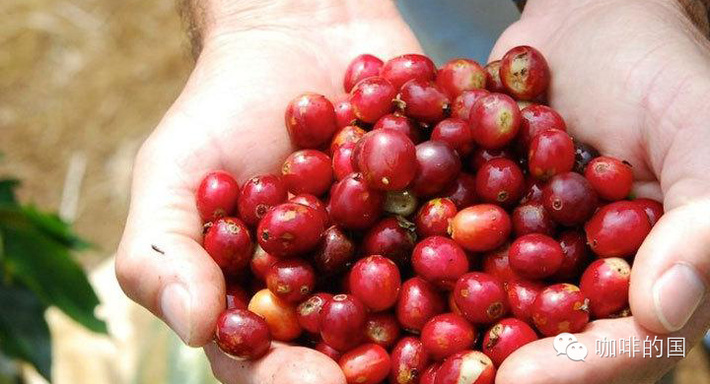
Costa Rican Coffee Editor Costa Rican Coffee is produced in the Republic of Costa Rica (The Republic of Costa Rica) in the south of Central America. Its quality is similar to that of Colombian coffee and is suitable for blending mixed coffee. The coffee beans produced at the high latitudes of Costa Rica are famous in the world, full-bodied, mild in taste, but extremely sour.

Coffee beans from San Pedro Manor, Puerto Rico introduce coffee producing areas in south-central China
Puerto Rico Puerto Rico San Pedro Manor Coffee beans Puerto Rico's new farm coffee is a mild, supple, well-balanced island bean with a charming single malt aroma, extremely sweet when sipped in a cup, and medium-roasted creamy and greasy texture that is often suitable for Puerto Rican island beans. "Puerto Rican Coffee beans | San Pedro Manor Cafe, Puerto Rico
The main producing areas and characteristics of Coffee in the World
Coffee production zones (commonly known as coffee belts) range from 25 degrees north latitude to 30 degrees south latitude, covering many countries in Central, West Africa, the Middle East and South Asia, the Pacific, Latin America and the Caribbean. The reason why coffee cultivation is concentrated in this area is mainly due to the limitation of temperature. Because coffee trees are vulnerable to frost, neither north nor south latitude is suitable, especially in the tropics.
Varieties of raw coffee beans
At present, there are so many kinds of coffee beans imported from all over the world that there is no choice. Here, we will introduce the main producing areas and the characteristics of coffee beans as a reference for you to choose and buy coffee. * Brazil (South America) is the world's number one coffee producer and exporter. Because it is distributed all over the country, the quality is different, and it has its own standard (NO.2-NO according to the amount of dopants)

Basic knowledge of coffee in main producing areas and characteristics of coffee
Coffee production zones (commonly known as coffee belts) range from 25 degrees north latitude to 30 degrees south latitude, covering many countries in Central, West Africa, the Middle East and South Asia, the Pacific, Latin America and the Caribbean. The reason why coffee cultivation is concentrated in this area is mainly due to the limitation of temperature. Because coffee trees are vulnerable to frost, neither north nor south latitude is suitable, especially in the tropics.